
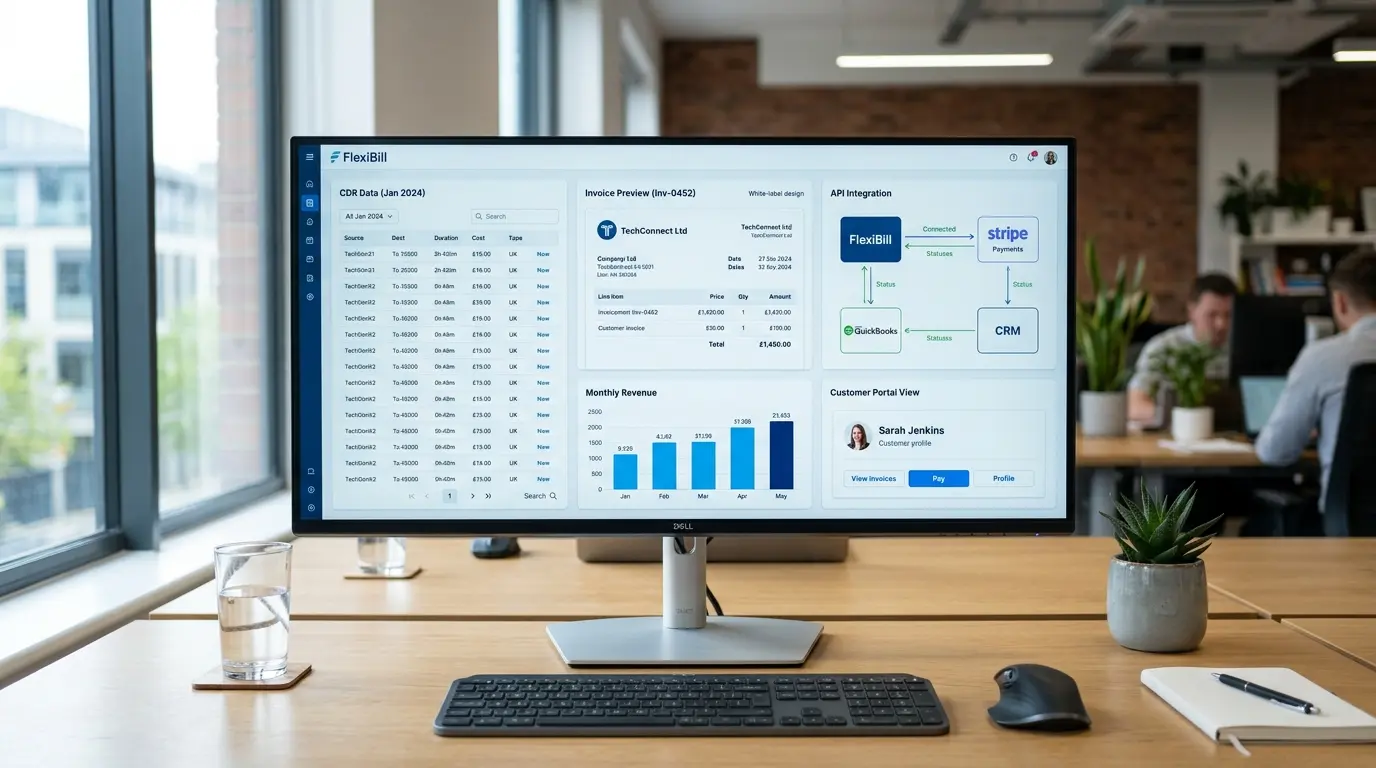
What Should You Look for in a Telecoms Billing Platform?
Your billing system is the engine of your business. It touches every customer, every invoice, and every pound that comes through the door. If it can’t keep up with what you need, you’ll feel it every month.
Whether you’re picking your first telecoms billing platform or thinking about switching, these five features matter most. Get them right and billing becomes something your system handles. Get them wrong and you’re back to spreadsheets and late nights.
Key Takeaways
- Your billing platform should process CDRs automatically from any carrier, in any format
- Flexible pricing lets you sell the way your customers want to buy
- A white-label portal gives your customers self-service without losing your brand
- API access connects billing to the rest of your business
- Good reporting shows you where the money is, not just where it went
1. Does It Handle CDR Processing Automatically?
Call detail records are the foundation of telecoms billing. Every call, every data session, every transaction starts as a CDR. If your billing system can’t collect and rate those records automatically, you’re doing the hardest part of billing by hand.
What to look for
A good automated CDR processing setup handles three things without you getting involved:
- Multi-format support. Your carriers don’t all send CDRs in the same format. Some use CSV. Some use fixed-width text files. Some have their own proprietary layouts. Your billing platform needs to read them all. Ours supports 85+ CDR formats from UK carriers, so you won’t get stuck when you add a new supplier.
- Automatic collection. CDR files should arrive in your system on their own, via SFTP, API, or scheduled downloads. No logging into carrier portals. No manual uploads. No risk of a missed file slipping through the cracks.
- Anomaly detection. When something looks wrong, you want to know before the invoice goes out. Unusual call patterns, missing records, or sudden spikes in usage should trigger an alert, not a customer complaint.
From our experience: The most common billing errors we see from new customers come from CDR files that changed format without warning. Automated format detection catches these before they cause problems.
If you’re still downloading CSV files and processing them in spreadsheets, this one feature alone will transform your month-end.
2. Can It Handle the Way You Actually Price Your Services?
Your customers don’t all buy the same way. Some want simple per-minute rates. Others want bundles. Some need different rates at different times of day. If your billing system only handles basic pricing, you’re limited in what you can sell.
The pricing models that matter
A proper telecoms billing platform should support:
- Bundles that combine voice, data, and other services into a single monthly charge. Customers like the simplicity. You benefit from higher revenue per customer and less churn.
- Tiered pricing where rates change based on volume. Your high-usage customers expect a better deal. Your billing system should handle that automatically.
- Time-based rates for peak and off-peak billing. If your carrier charges differently by time of day, your billing should reflect that.
- Geographic pricing for international and special-rate calls. Different destinations cost different amounts. Your billing needs to keep up.
- Promotional rates with automatic start and end dates. Run a three-month offer without worrying about someone forgetting to switch the price back.
Here’s a good test: can you set up a new pricing structure yourself, without phoning your billing provider? If the answer is no, that’s a problem. You should be able to create and adjust prices as your business needs change.
3. What Does Your Customer Portal Look Like?
Your customers expect to check their bills online. That’s not new. What matters is whether the portal they see looks like yours or like someone else’s.
A white-label billing portal lets your customers:
- View and download bills for the current month and previous months. No phone calls. No email requests. Just log in and it’s there.
- Check their usage with clear dashboards. How many minutes have they used? What’s their spend so far this month? Customers who can see their own data raise fewer queries.
- Make payments directly through the portal. The easier you make it to pay, the faster you get paid.
Why branding matters
The portal should carry your logo, your colours, and sit on your domain. When your customer logs in, they should see your business, not your billing provider’s. That’s the difference between a tool you use and a service you offer.
A well-branded customer portal also reduces your support load. When customers can find answers themselves, they don’t need to phone you. That’s time saved for both of you.
4. Does It Connect to Your Other Systems?
Your billing platform shouldn’t sit on its own. It needs to talk to the other tools you use every day. That’s where API access comes in.
What good API access looks like
With a proper API, you can connect your billing to:
- Your CRM so customer details stay in sync. When you update a customer’s address in one system, it updates everywhere. No double entry. No mismatched records.
- Accounting software like Xero or Sage. Invoices flow straight from your billing platform into your accounts. No re-keying figures. No end-of-month reconciliation headaches.
- Provisioning systems so new services start billing from the moment they go live. No gap between activation and the first invoice.
The fewer manual steps between your systems, the fewer things go wrong. Every time someone types the same information into two different systems, there’s a chance of a mistake. API connections remove that risk.
If you’re a reseller with plans to grow, this is the feature that stops billing from becoming a bottleneck.
5. Can You See Where You’re Making Money?
Billing data is business data. Every invoice, every call record, and every payment tells you something about your customers and your margins. But only if your system can show it to you clearly.
What to expect from reporting
Your telecoms billing software should answer these questions without you having to export anything:
- Which services bring in the most revenue? If you’re selling voice, data, and cloud services, you need to know which ones are earning their keep.
- What are your actual margins on each customer? Revenue is one thing. Profit is another. Your billing system should show you both.
- Where are you losing money? Some customers might be costing you more than they pay. Some call types might have thinner margins than you thought. You need to see that.
Look for margin reports, revenue breakdowns, and dashboards that update automatically. If you need to export data to a spreadsheet just to understand your own numbers, your system isn’t doing its job.
Bonus: Does It Help with Compliance?
Between Ofcom rules, GDPR, and Making Tax Digital, there’s plenty to keep track of. Your billing platform should make compliance easier, not harder.
What matters here:
- Accurate tax handling that applies the right VAT treatment to every service type
- Audit trails that show exactly how every charge was calculated
- Data protection built into how the system stores and manages customer data
- Digital record keeping that meets HMRC’s Making Tax Digital requirements
A billing system that handles compliance properly gives you one less thing to worry about. And when questions do come up, you’ve got the records to back you up.
Frequently Asked Questions
What is telecoms billing software?
Telecoms billing software automates the process of billing customers for voice, data, and connectivity services. It collects call detail records from carriers, applies the correct rates, generates invoices, and tracks payments. For UK telecoms resellers, it replaces manual spreadsheet billing with a system that handles the whole cycle.
How many CDR formats should a billing platform support?
The more the better. UK telecoms resellers typically work with several carriers, each with their own CDR format. A good billing platform should support dozens of formats out of the box. Our platform handles 85+ formats, covering all major UK carriers and many smaller ones.
Do I need API access in my billing platform?
If you use a CRM, accounting software, or any other business system alongside billing, then yes. API access lets your systems share data automatically. That saves you time and removes the risk of errors from manual data entry. It’s especially important if you plan to grow your customer base.
Can I brand my customer portal?
With white-label billing, yes. A white-label portal carries your logo, your colours, and sits on your domain. Your customers see your brand, not your billing provider’s. It’s an important part of looking professional as you grow.
Want to see how our platform handles all five? Arrange a demo and we’ll show you.